
Days have turned into weeks, and the market is shifting, as it always does. At Solution Prime, we keep our fingers on the pulse of the industry, ensuring we’re ahead of the curve while safeguarding our partners’ futures. We have worked with market-leading brands across the industry, from branding SWAT Round-up team to executing full-scale marketing for shooting ranges. However, building a project from scratch remains our favorite challenge. The time has come to stop watching from the sidelines and publish our analysis of what we’ve been seeing on the ground. Think of this as a case study: evidence-based, data-driven, and devoid of the usual industry fluff. Let’s dive in.
Shooting range and experience? How it started
The shooting range experience market in Eastern Europe is on a relentless upward trajectory. Back in the day, ranges popped up out of nowhere, handing firearms to tourists just for the novelty of it. But as the world evolves, so does the market. Guest behaviors and expectations have shifted, and they demand a professional standard. You can either adapt, or you can start shopping for display cases, because if you don’t evolve, your range will quickly become an abandoned, dusty museum of missed opportunities.
What shifted in Europe? It’s simple: post-pandemic, the floodgates opened, and people started traveling again. But as the political and economic landscape fluctuated, travelers became more discerning. Their budgets haven’t necessarily vanished, but their standards have skyrocketed. They read reviews, scrutinize websites, and compare options before committing. In this climate, the biggest advantage a business can have is a transparent, functional, and user-friendly booking system. Simply opening your doors, launching a basic site, and throwing money at ads isn’t enough anymore. That’s when you’ll start hearing from the “shady character in a long coat and fedora” whispering, “I have a trick for you.” This is where the Wild West of business ethics begins: When the bills are due, the numbers aren’t coming in, and owners get desperate.
The Wild West
Unfortunately, the same illicit tactics that plagued the hospitality sector years ago have metastasized here. I’m talking about brute-force spam link attacks, review bots, and my personal “favorite”: the misleading Google Business Profile. While Google’s algorithms have become sophisticated enough to flag and suppress some blatant review spam, they aren’t perfect. You cannot just sit back and hope the AI handles it. You have to be proactive.
If you see fake reviews, you must report them immediately: Google Business Support: Review Management.
If you understand SEO, you know that local signals are the backbone of your digital footprint. You can write the best content in the world and build a mountain of links, but if your Google, Bing, and Apple Maps profiles aren’t optimized, you’re essentially climbing that mountain barefoot while your competitors are taking the lift. This is where those “falling rocks”, malicious local SEO tactics, come into play. Competitors are placing phantom business profiles in high-traffic areas, flooding them with fake reviews and photos, effectively hijacking your visibility in search results and AI-driven citations.
A particularly fascinating and infuriating sidenote:
We’ve identified a new scheme involving “ghost businesses.” Scammers are creating map locations at the exact addresses of legitimate ranges, often linking them to affiliate platforms like GetYourGuide. Here is the kicker: after a few days, they mark these fake locations as “Permanently Closed.” Consequently, potential customers searching for your business see your address, your photos, and your service, but with a big, red “Permanently Closed” tag slapped on it. It’s an aggressive play to bleed your conversions. It doesn’t destroy your business overnight, but it certainly hemorrhages revenue if you aren’t vigilant about reclaiming and verifying your digital real estate.
If you find yourself a victim of this, you need to act fast. You can attempt to claim the business, but for faster results, use the
Business Redressal Complaint Form: Report a violation on Google Maps.
Your shady partner
The shady character is still sitting in the office drinking your coffee, and while the numbers might be ticking upward, the pressure to scale faster is mounting. Unfortunately, he has more tricks up his sleeve.
We all know that in the age of AI, a “competent” SEO agency can churn out endless volumes of content about services or quality levels that simply don’t exist. They build a network of backlinks to support these fabrications, and voila AI models start citing and recommending your business as an authority. Let’s be clear: this is a high-stakes, short-term game. While a complex system of user signals eventually connects the dots to expose the fraud, you might “win” the initial traffic battle. But make no mistake: the war has just begun, and it is a war you are guaranteed to lose.
Why? Because you can trick a customer once, but their voice is far louder than you think. Most operators obsess over Google Maps and TripAdvisor, but they are completely blind to the real wildfire: Reddit. Reddit is a massive, indexed forum where the “speech is free” and the moderation is notoriously unpredictable. Once a narrative takes hold there, there is very little you can do to scrub it.
Reddit: The world of free speech
This brings us to the core of our case study. We recently analyzed a detailed Reddit post from a customer detailing their entire journey: from the initial search and the struggle of navigating misleading advertisements, to the eventual frustration and the final, authentic solution they found elsewhere. They didn’t bother with a formal Google review. They just told their story. Now, that story is out there. A permanent, searchable testament that helps other potential customers decide which business is actually worth their hard-earned money.
Customer behaviour
Let’s strip away the fluff and analyze the anatomy of this story. Our protagonist has arrived in a new city, exhausted the standard “must-see” tourist sites, and is now hunting for a unique experience. As global travel trends pivot toward high-engagement experiences, providers are scrambling to meet this demand. The customer’s process is predictable:
- First step: The AI Inquiry: They ask, “What is the best thing to do in [City]?” The AI provides a curated list of unique, high-fun-factor experiences and mentions a few nearby providers.
- Second step: The Google Maps walk: The customer selects a provider, plugs the name into Google Maps, and starts walking. They arrive at the location, only to find nothing there—or worse, a closed storefront. They are standing in the middle of a crosswalk, phone in hand, wondering: Is Google’s map broken, or is the service provider a fraud?
What happens next? Most customers will immediately pivot to a competitor. But what if they don’t? What if they call the business? Let’s be blunt: you’ve already lied to your guest. Once the facade of your location is shattered, the customer starts asking, “If the location is a lie, what else is? Are the prices fake? Is the service itself a scam?” This is not the introduction you want to make.
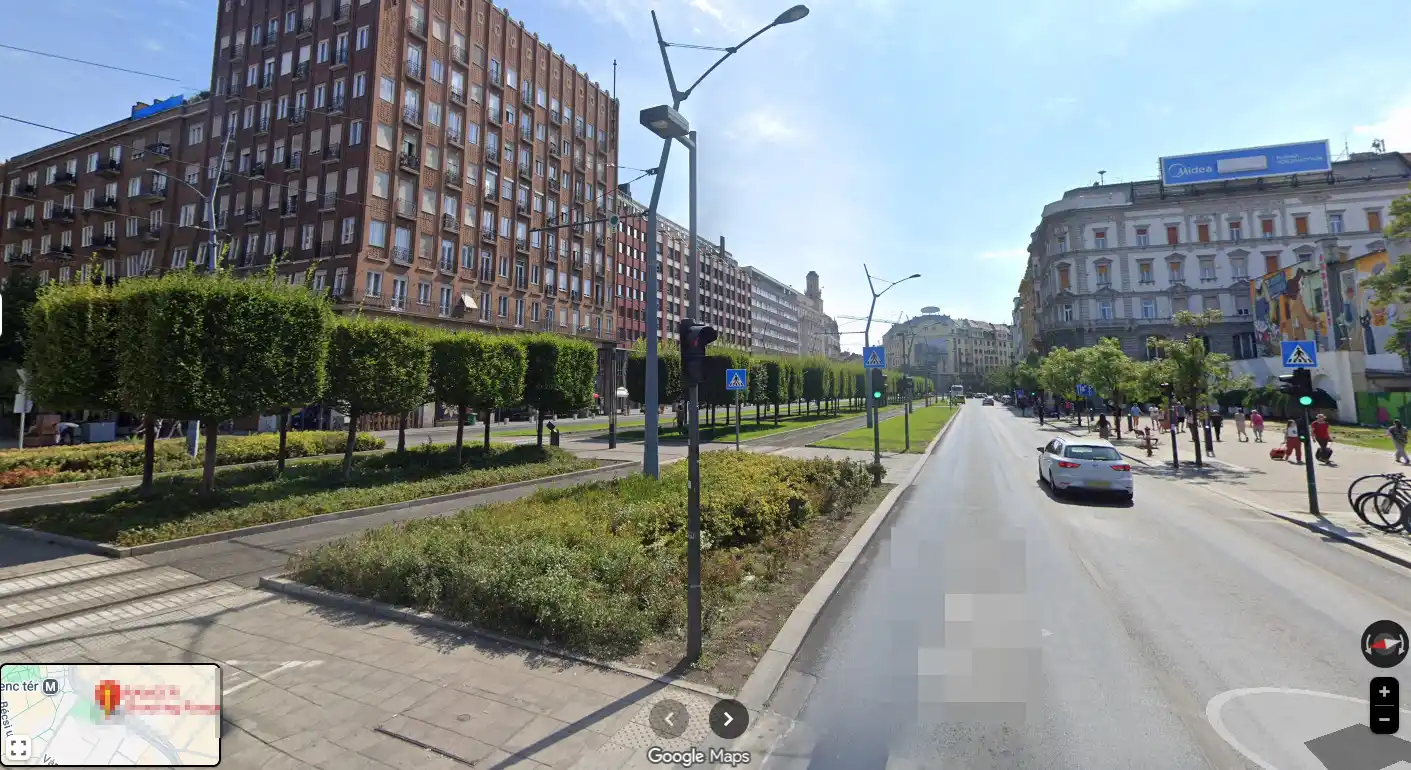
The digital mirage: A pin on a map does not equate to a business presence. Scammers rely on customer confusion to capture clicksSure, some businesses argue that if they offer a “niche” enough service, the customer will be too desperate to care. They might get a 5-star review simply because the guest hasn’t experienced a real provider yet. But that is the “one-and-done” trap. You’ve secured a one-time transaction, but you’ve lost the returning visitor. And if your business model relies on the idea that “they’re just tourists, so who cares if they get scammed?” congratulations, you are the primary reason certain cities have become synonymous with “tourist traps.”
Keep that up, and you’ll soon find that even the tourists have caught on, leaving you with no one to scam but the locals who know better.
Persistent customer
Back to our protagonist: after that initial failure, they moved on to a second provider. As we’ve established, today’s customer is impulsive; they need the service now. They finally found relief when they spotted a familiar, distinctly British business name. It’s a classic tactic: weaponizing a “trustworthy” name to siphon off the credibility you haven’t actually earned.
With a big name comes a big responsibility. Our protagonist arrived at the facility, paid for the service, and began the program. We aren’t here to critique the technical quality of the shooting (that’s a different debate) but we are here to analyze the environment and the customer journey. To put it bluntly, the facility was a disorganized, “trashy” environment with decor that tried to be edgy but ultimately fell flat. This is a fundamental failure of brand communication.
Who is your persona?
The truth is, you cannot serve everyone and the good news is, you don’t have to. When planning a business, you must define a clear persona and curate the entire customer journey around that specific guest. If you want to position yourself as a “Hardcore British Armed Forces” experience, then commit to it: reflect that in your digital platforms, your marketing copy, and every square inch of your decor. If you do that, you must be prepared to let go of the customers who aren’t looking for a military-style boot camp.
This approach is your best defense against bad reviews. When you are clear about what you offer, you attract the right people, ensure they leave satisfied, and avoid the friction of misaligned expectations. It is a win-win-win: the customer gets what they wanted, you keep your reputation intact, and the industry stays healthier. It’s time to realize that you can achieve these results without fighting a constant, petty war for every last lead.
I understand that brand of humor. I’m familiar with it. But there is a time and a place for it, and the professional business arena is neither.

The result? The guest was left with a “sweet and sour” aftertaste. You might win their initial trust by playing on the shared heritage of a familiar name or a common passport, but don’t make the mistake of assuming that a shared nationality equates to the same taste, passion, or sense of humor.
In most cases, a visitor might walk away thinking, “Well, at least I did it,” share a few photos, post to social media, and consider the box checked. But not in this story. This is exactly where our protagonist (having already navigated one scam and one disappointment) started asking questions. They still had the budget, the time, and the intent to find the high-quality experience they had originally dreamed of.
Back to our protagonist. Having moved past the initial impulsive need for a quick thrill, they returned to their search. This time with a cooler head and a more analytical eye. They found another provider, placed a call, and engaged in a brief conversation. But because of the previous two “near-misses,” they were no longer the easy, impulsive lead. They were now a skeptical consumer, hesitant to commit their budget before verifying exactly what was on offer.
Ripple effect
Think about the ripple effect this has on your business. If you serve 1,000 customers a month, and just 10% of them feel as “scammed” as our protagonist, that is 100 people walking away with a negative narrative. These aren’t just one-off losses; each of those individuals has a network friends, family, and colleagues. Let’s be conservative and assume each person tells just five others about their experience. You are now looking at 500 people who have been warned to stay away from your city’s service providers.
Friday night pub effect
But it doesn’t stop there. Factor in the “Friday night pub effect”. Where these stories are shared over beers and take on the weight of absolute, objective truth. Add another 5% for the social reach of those anecdotes, and suddenly, thousands of potential customers have decided that your country’s industry is built on deception.
To those operators still clinging to these “clever” shortcuts, I’ll say it again: Nice work. You’ve successfully managed to turn a minor local inconvenience into an international warning sign.
But our story ends differently. This provider understood the customer’s journey. They didn’t push for the immediate sale. They answered the questions, eased the concerns, and provided the transparency the customer was looking for. They understood that in this market, the real currency isn’t just the entry fee, it’s the trust you earn by actually delivering on what you promised.
Our hero service provider
Back to our “hero” with the winning provider. When our protagonist arrived, the atmosphere wasn’t just professional; it was genuinely welcoming. Think of a high-end hotel lobby rather than a sterile office. Instead of the typical, tacky “WordArt” signage and makeshift décor, they were met with comfortable lounge seating, complimentary coffee and tea, and a curated vibe.
Costs of the excellence
Let’s break down the costs. A decent TV might run you £400. Coffee, tea, and water are a nominal monthly expense, let’s say £200. A quality speaker for ambient music? That’s a one-time £50 investment that will last you years. You’re looking at an initial setup cost of roughly £650 – £700. In a business where the average ticket is £85 – £90, you are essentially covering the entire cost of your atmosphere with the revenue from a single group of eight to ten people. Yes, we could dive into the weeds of electricity bills and payroll, but the point remains: the barrier to entry for excellence is remarkably low.

If you are planning to serve 1,000 customers a month, why are you still scrimping on the basics? That investment in excellence creates the first impression that wins the customer before the program even begins. The best part? The mood, the vibe, the genuine smile, and the welcoming tone, those cost absolutely nothing.
The service itself followed suit: polite, friendly, and attentive. I checked their reviews, and the same feedback appears consistently: the staff. It costs you zero pennies to foster a culture where employees aren’t burnt out, grumpy, or miserable. A proper business model supports your staff, which in turn supports your guests.Then, there is the matter of the upsell. If you time it right. At the peak of the experience when the adrenaline is high and the customer is satisfied, you can increase the average cart value without it feeling like a desperate cash grab. But a word of warning: know your customer’s limits. If you try to aggressively push products on someone who has already hit their budget ceiling, you won’t just fail to make the sale; you’ll leave them feeling cheap, pressured, and disappointed. Never “stuff” the sale. Offer, ask, and do it politely. That is all.
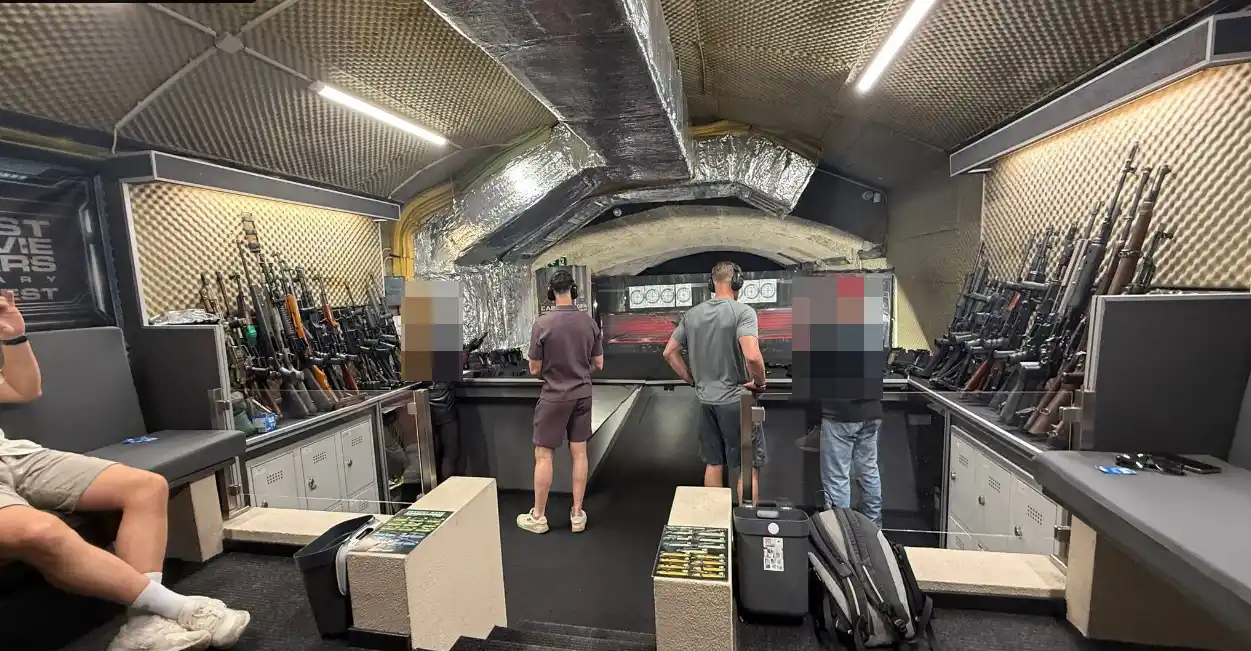
The whole original story
I am certain that by now you are curious about the full, unvarnished story of our “hero.” If you have a moment, I highly recommend reading the entire account on Reddit. Prepare the popcorn, grab a beer, and enjoy the show: From office wall to the firing line: My Budapest shooting range
Conclusion
This case study has only scratched the surface of the “dark side” of the industry, but hopefully, these insights serve as a necessary wake-up call.
As a business owner, you stand at a crossroads. You can choose to act ethically and build a foundation of success rooted in proper planning, or you can chase the mirage. You know the one: those “shortcut” signs held up by the shady characters on the side of the road, promising you a faster detour to profit. Let me be clear: those signs are a hallucination. They are the hallmark of a desperate future, leading you toward a slow, grinding struggle just to keep your head above water.
The choice is simple. Be honest. Plan for the long term. Care for the machine you have built.
In an ideal world, the market wouldn’t be a battlefield where we try to destroy one another. It would be an ecosystem where competitors work alongside each other, fostering a professional environment where a guest is treated like a human being…not just a walking wallet. That future is possible, but it starts with you deciding that the “Wild West” era of our industry is over.
Good morning, it’s time to grow up!